 80-20+
Is the Rule of Law Eroding in America?
Summary of how the rule of law plays out in America today with examples
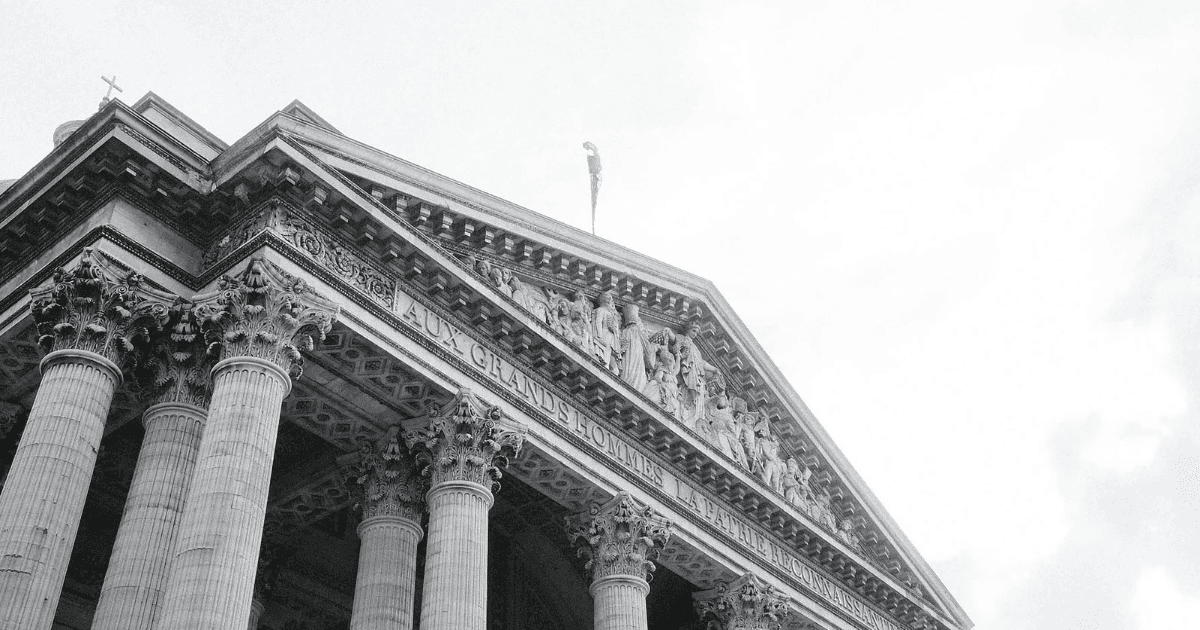
It's comforting to think of authoritarian abuses as something that happens elsewhere — that it couldn't happen here. But the American rule of law isn't a law of nature like gravity. It's a human construct, maintained only for as long as political leaders choose to respect constitutional limits. When achieving a desired policy outcome starts to matter more than following the Constitution and the law, the rule of law suffers — whether through actions that are outright illegal, or through a simple failure to enforce the law at all.
This isn't a partisan story. Leaders from both major parties have tested or crossed these guardrails repeatedly, as the examples below show. We'll look at claims of power the Constitution doesn't grant, the use of government power as a weapon against political adversaries, and finally immigration — where several of these threads come together at once.
(For the underlying principles this section assumes — what the rule of law actually requires — see the companion piece, [What Is the Rule of Law?].)
Claiming Powers the Constitution Doesn't Grant
Border wall funding by emergency declaration (2019). When Congress refused, after months of negotiation, to fund President Trump's proposed border wall, his administration declared a national emergency under the 1976 National Emergencies Act and redirected billions of dollars Congress had already appropriated for military construction toward the wall instead. Federal courts ruled the action illegal. The Supreme Court allowed construction to continue while the case was on appeal, but the case never reached the Court — President Trump lost the 2020 election first, and President Biden ended the emergency declaration in 2021.
Student debt cancellation by executive order (2022). President Biden made the same kind of move from the other direction. Early in his term, he said plainly that he lacked the constitutional and statutory authority to unilaterally forgive student loans. In 2022, after Congress declined to grant him that authority, he tried anyway — using a "creative" reading of the 2003 HEROES Act, a law originally meant to protect deployed service members from loan penalties, to attempt to cancel over $400 billion in federal student debt. The Supreme Court struck this down in Biden v. Nebraska (2023), ruling that the President had exercised power that belongs to Congress.
Different presidents, different parties, different policy goals — but the same underlying problem. When a president can't get Congress to pass what he wants, bypassing Congress to get it anyway erodes exactly the legal constraints that are supposed to prevent one-branch rule.
When Bureaucracy Becomes a Weapon
The most dangerous version of this threat is when the state turns its own bureaucracy — especially law enforcement and prosecutors — against citizens who disagree with it. Abuses in the United States haven't approached the scale of Russia's, but recent examples show the pattern is real here too.
The IRS and the Tea Party (2010–2017). Beginning in early 2010, the IRS's Determinations Unit flagged nonprofit tax-exemption applications for extra scrutiny based on their names — organizations with words like "Tea Party" or "Patriot" got pulled for extended review. A 2013 Treasury Inspector General report found the IRS had used these criteria for more than eighteen months, leaving many applicants waiting over a year while facing intrusive demands for donor lists and details of their political activity. President Obama called it "intolerable and inexcusable," and the IRS's exempt-organizations director resigned. The Justice Department investigated but declined to bring criminal charges in 2015, attributing the conduct to "mismanagement, poor judgment, and institutional inertia" rather than intentional wrongdoing. In 2017 the IRS formally apologized, admitted its treatment of conservative applicants "was wrong," and the government paid $3.5 million to settle a class-action suit brought by more than 400 affected groups.
Lawfare — used against both parties. Using prosecutorial power as a political weapon rather than an impartial tool of justice — sometimes called "lawfare" — isn't confined to one side. Between 2023 and 2024, then-former President Trump faced four criminal cases and one civil case that many viewed as politically motivated. Neither of the two federal cases (over classified documents and the 2020 election) reached trial; both were dismissed. Of the three state and local cases, the Manhattan hush-money conviction is widely viewed as legally shaky (the judge imposed no punishment at sentencing), the Georgia racketeering case saw its district attorney disqualified in December 2024 over an undisclosed relationship with a prosecutor she had hired, with the case itself later dismissed in November 2025 for unrelated reasons, and a $454 million New York civil fraud judgment was later found excessive on appeal — both sides have appealed further.
Since returning to office in 2025, the Trump administration has used comparable tactics against its own perceived opponents — executive orders targeting several major law firms over their past legal work for political adversaries, stripping attorneys' security clearances and barring them from federal buildings. Federal judges ruled these orders unconstitutional violations of the First Amendment and due process; the administration has appealed. Grand juries indicted former FBI Director James Comey and New York Attorney General Letitia James in late 2025 after career prosecutors had already declined to bring charges — both indictments were later dismissed by a federal judge, and a second grand jury declined to reindict James.
Whatever the ultimate merits of any single case, the pattern itself — a bipartisan willingness to point law enforcement at political opponents — is the real story. The good news: the judiciary has, so far, provided a real check on both sides, dismissing problematic indictments, disqualifying compromised prosecutors, and striking down unconstitutional executive action regardless of which party was in office.
Immigration: Where It All Comes Together
Nowhere is the strain on the rule of law more visible than immigration, because it sits at the intersection of deeply held moral beliefs and existing law — and U.S. presidents have ignored the rule of law here from both directions at once.
Failing to enforce the law. When federal authorities simply decline to enforce immigration statutes and permit large-scale illegal entry over years, the message — to immigrants and citizens alike — is that compliance with the law is optional depending on who's in charge. That's different from ordinary prosecutorial discretion, where prosecutors make case-by-case calls given limited resources. A systemic, years-long decision not to enforce the law is a policy choice to set the law aside. Sanctuary policies that issue identification cards to those unlawfully present, or bar local law enforcement from cooperating with federal authorities, compound the problem — and outright obstruction of federal enforcement crosses into violating the Constitution's supremacy clause.
Stripping away due process. The opposite failure is just as damaging. The Fifth Amendment guarantees due process to every person, not just every citizen. When individuals are arrested without reasonable basis, homes or businesses are entered without a judicial warrant, people are denied any chance to prove lawful status, or individuals are deported or detained without a hearing, the law is being broken in the other direction. There's genuine debate about exactly what due process is owed to people without lawful status — but it isn't nothing.
Consistent enforcement paired with real due process is what keeps immigration a law-based system rather than a political battleground where your rights depend on who currently holds power. Resolving the underlying tension requires Congress to actually legislate — a responsibility it has left unmet for decades. That failure doesn't license other branches, or state and local governments, to fill the gap on their own.
Why It Matters — and What Keeps It From Getting Worse
None of the specific cases above touches most Americans' daily lives directly. But together, they represent repeated efforts — by both parties — to claim authority the law doesn't grant, to bypass or break the law when it's inconvenient, or to deny rights the law recognizes. And they aren't isolated; more examples exist beyond what's covered here. Once ignoring the rule of law becomes normal, each new violation makes the next one easier — and that's the road toward Venezuela and Russia, not an exaggeration but a real trajectory.
Part of what keeps that trajectory in check is scrutiny — and it's worth noting that news outlets on both sides of the aisle have often looked away from these abuses when the offending administration shares their political leanings, weakening a check that used to matter more.
The Need for Institutional Vigilance
The rule of law isn't a law of physics. It survives only if citizens and leaders keep choosing to follow it — especially, and precisely, when it produces outcomes they don't like.
Tolerating executive overreach because we favor the policy, cheering selective prosecution of people we disagree with, or picking and choosing which due process rights to honor — all of it chips away at the same foundation. Without the rule of law, the weak have no defense against the powerful, businesses have no recourse against government overreach, and citizens have no protection from the state itself. Preserving it takes ongoing civic vigilance, institutional honesty, and an insistence — from everyone, regardless of who's currently in power — that justice stay equal, neutral, and blind.
The alternative isn't hypothetical. It's Venezuela under Chávez. It's Putin's Russia. That's not rhetorical exaggeration — it's where the road leads if the invisible infrastructure holding it all up is allowed to keep failing.
Related issues
More explainers
Stay informed
Plain-language explainers and sourced updates, in your inbox. No spin, unsubscribe anytime.