 80-20+
What is the Rule of Law?
A summary of what the rule of law is with examples
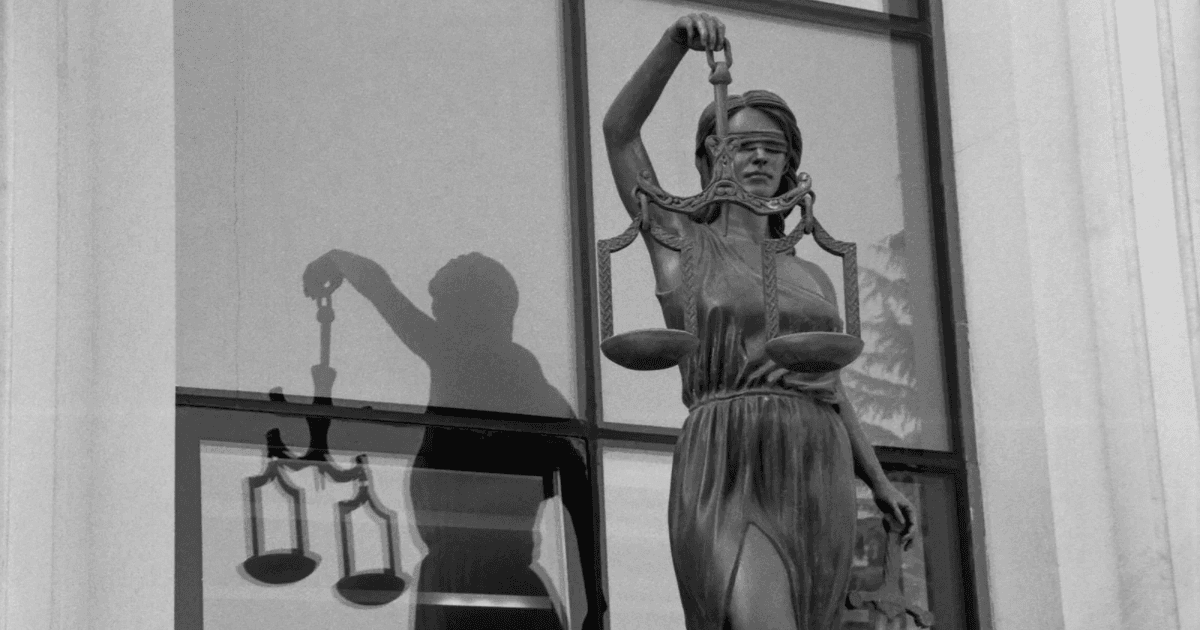
Living in a country that observes the rule of law is a lot like living in a home with working plumbing, electricity, and a sound roof: when it functions, nobody thinks about it. We turn on the tap and clean water comes out. We plug in a device and it works. It rains, and the water stays outside. Only when the pipes burst, the wiring fails, or the roof leaks do we realize how much we depend on competent engineering we never see.
The rule of law works the same way for freedom itself.
Most Americans take for granted that laws are, for the most part, enforced justly and equitably. We have a long tradition of expecting this — both Thomas Jefferson and Abraham Lincoln invoked rule-of-law principles in their first inaugural addresses. Our history includes real injustice, and justice has never been perfect, but we have steadily reformed our laws and institutions to address those failures rather than abandon the underlying principle.
We rely on the rule of law constantly, usually without noticing. We plan careers, buy homes, start businesses, sign contracts, drive on public roads, and speak our minds on political issues — all without stopping to think about the legal guarantees that make doing so safe. Even when we disagree with a law, we expect it to be enforced consistently until we change it through legitimate political action. The moment those in power are free to pick and choose which laws to enforce, and against whom, is the moment a country starts down the road to tyranny.
Because most Americans rarely see what happens when the rule of law disappears, it's easy to treat the phrase as dry and abstract — something reserved for courtrooms and law school. In reality, it's the foundation underneath the Declaration of Independence's promise of life, liberty, and the pursuit of happiness.
Four Principles
Stripped of legal jargon, the rule of law rests on four basic ideas:
- Laws apply to everyone equally. No individual — regardless of wealth, political affiliation, or elected office — is above the law, and no one is beneath its protection.
- Laws must be known and predictable. They must be clear and publicly available. No president, governor, or mayor may ignore or change the law for personal or political convenience, and laws can only be enforced going forward — an act that was legal when it happened cannot be made illegal after the fact.
- Justice must be administered transparently. Government must administer, adjudicate, and enforce the law openly enough that citizens can see and understand how it's being applied.
- Justice must be independent of politics. Courts must apply the law without fear, favor, or partisan loyalty. Law enforcement and prosecution are traditionally expected to meet the same standard, even though — as executive functions — they aren't independent of the political branches in the strict constitutional sense.
Where these four principles hold, people enjoy personal liberty. Where they extend to property rights and the enforcement of contracts, people also enjoy economic freedom. Where they don't hold, authoritarianism, corruption, and social breakdown tend to follow.
What Happens Without It: Two Examples
The value of the rule of law is easiest to see where it's missing — where the state doesn't act as an impartial referee, but as a player advancing its own interests.
Venezuela: When the State Stops Protecting Property
A healthy economy depends on legal predictability. Entrepreneurs invest time and capital because they trust the state will protect what they build. When that trust disappears, so does the investment.
Venezuela shows what happens when it does. Before Hugo Chávez was elected president in 1998, Venezuela was among the wealthier countries in Latin America, despite real political and economic strain. Over the following 28 years, Chávez and his successor Nicolás Maduro systematically dismantled the rule of law — nationalizing private businesses, seizing foreign assets such as oil rigs and agricultural operations, and repudiating legal contracts without compensation. Hyper-restrictive currency controls choked businesses' ability to operate, profit, or move earnings out of the country. Success stopped depending on productivity and started depending on bribery and political favor with the regime.
The result was catastrophic: production and markets collapsed, capital fled, hyperinflation set in, and poverty spread widely. Nearly every foreign company pulled out entirely, unwilling to bet on a legal system that no longer protected their rights. Today Venezuela ranks as the poorest country in South America, ahead of only Haiti, Nicaragua, and Honduras in the Americas as a whole.
Russia: When Law Becomes a Weapon
Where the rule of law isn't observed, criminal and civil statutes often exist to eliminate rivals rather than protect citizens. Stalin's secret police chief, Lavrentiy Beria, is said to have put it plainly:
Show me the man, and I'll find you the crime.
Russia under Putin follows that model. Regulatory, tax, and anti-extremism laws are written broadly and vaguely enough to be used as weapons of the state whenever convenient. Oligarchs loyal to the regime and senior officials break these same laws routinely, without consequence. But a business owner who refuses to pay extortion or speaks out politically — as Alexei Navalny and Mikhail Khodorkovsky both did — can expect the state to seize their assets and imprison them. Navalny died in prison.
Without the rule of law, the legal system stops protecting citizens' safety, rights, and freedom, and starts serving as an instrument for suppressing them.
Why This Matters to You
These aren't just cautionary tales from abroad. They illustrate what the rule of law actually does — it's the invisible infrastructure that lets you plan a life, build a business, own property, and speak your mind without wondering whether the rules will change based on who's currently in charge, or whose side you're on.
That infrastructure isn't self-maintaining. It survives only because citizens and leaders keep choosing to follow it — especially when it produces outcomes they don't like. Understanding what the rule of law actually requires is the first step in noticing when it's being tested closer to home.
Read the companion piece: [Is the Rule of Law Eroding in America?] — a look at how these same principles have been tested domestically, and by leaders of both parties.
More explainers
Is the Rule of Law Eroding in America?
Summary of how the rule of law plays out in America today with examples
Read explainer →Stay informed
Plain-language explainers and sourced updates, in your inbox. No spin, unsubscribe anytime.